
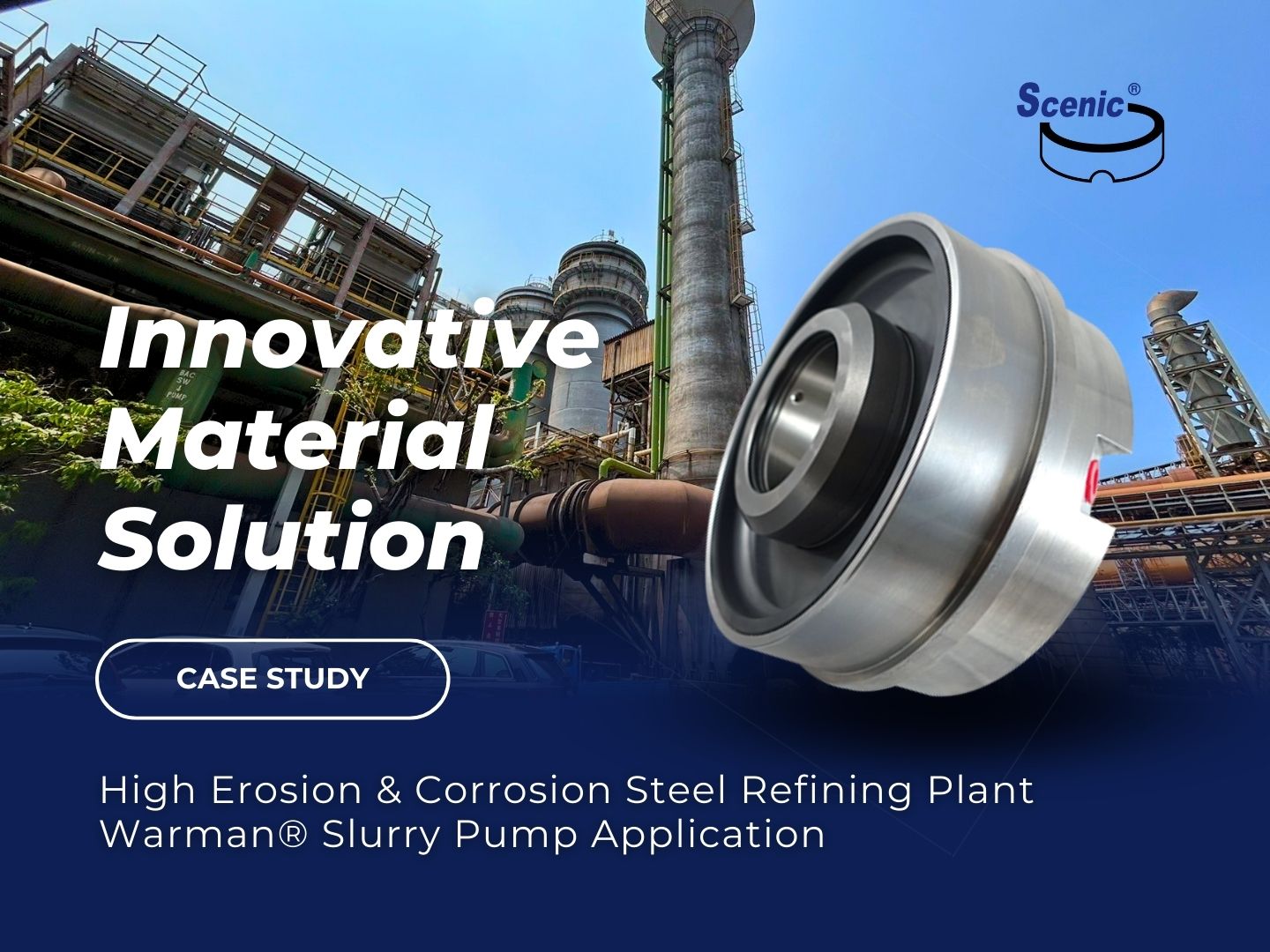
Innovative Material Solution for Warman® Slurry Pump Seal - High Erosion & Corrosion Steel Refining Plant Application
Frequent Seal Failures Due to Harsh Steel Plant Conditions
In the steel refining process, magnesium oxide (MgO) slurry is frequently used as a desulfurizing agent to reduce sulfur content in molten steel, enhancing its quality. This slurry is a suspension where solid magnesium oxide particles constitute 20% to 60% of the mass, with a Mohs hardness of about 6, and is alkaline, requiring equipment that is highly resistant to wear and chemical erosion to prevent damage and degradation.
Despite technological advancements that have stabilized MgO slurry, issues such as crystallization and clumping still arise, it’s vital to keep the slurry flow and equipment cleanliness. Moreover, sealing integrity is crucial, as dust contamination can lead to build up and plugging, causing equipment failure.
Severe Erosion of Wet Side Seal Components & High Maintenance Frequency
Mechanical seals typically divided into inner and outer sides by gland. During installation, the seal is threaded through the pump shaft, and the gland is secured to the pump housing with screws. This arrangement places half of the seal in direct contact with the process fluid, known as the "wet side" or "inner gland".
The transportation of magnesium oxide slurry uses a Warman® pump paired with a cartridge-style dual seal. The materials of the wet side are typically 316 stainless steel or 2205 Duplex steel, but within less than a month of operation, both materials were eroded and worn through, resulting in seal failure. Frequent failures severely impacted production efficiency, and in more extreme cases, the wet side components ware eroded through within 2 to 3 weeks, causing repeated shutdowns and emergency repairs. This recurring issue not only disrupted production but also posed serious safety risks. The customer urgently needs a reliable seal solution to address these challenges.
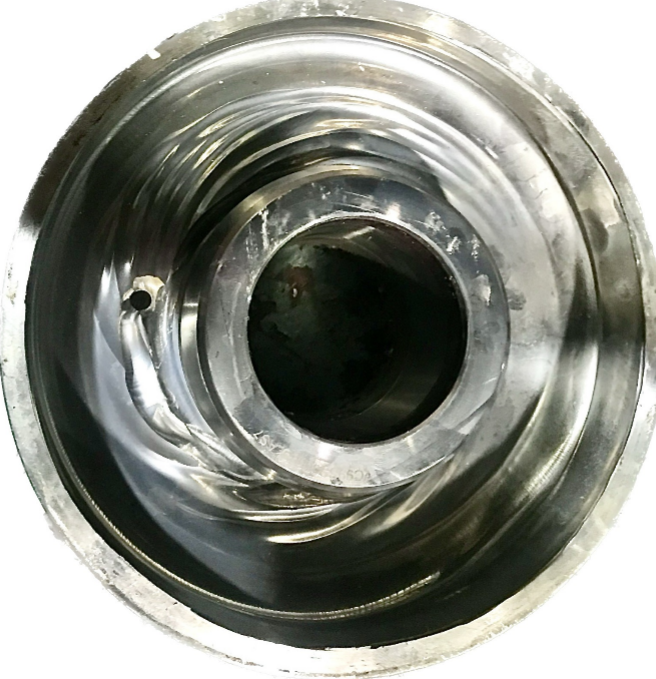
Severe erosion on the seal wet side.
Innovative Material Application with CarLife®299 Double Seal
Scenic’s engineering team conducted an in-depth analysis of the wear areas, revealing that the stainless steel wet side components of the dual seal were severely worn. Generally, stainless steel offers good resistance to magnesium oxide, but under these operating conditions—with high temperature and a fluid containing a high concentration of solid particles—severe erosion still occurred.
To address this, Scenic introduced the CarLife®299, which combines the double seal structure with an innovative material application. Designed to withstand "high erosion and strong alkalinity" conditions, the solution replaces the stainless steel in the wet side area with silicon carbide. This significant material upgrade greatly enhances the seal's erosion resistance and chemical durability, effectively extending the service life of the mechanical seal.
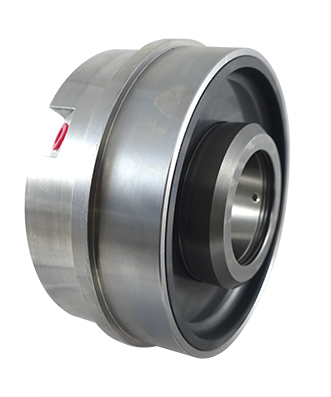
CarLife®299 with silicon carbide as wet side material.
Why Choose Silicon Carbide?
Silicon carbide is renowned for its high density and hardness, making it ideal for applications requiring superior wear and impact resistance, such as abrasives and cutting tools. Its use in mechanical shaft seals has been well-established, typically in components like sealing rings and wear rings.
Scenic has innovatively applied silicon carbide to the entire inner component of the seal, ensuring it remains resistant to erosion from suspended particles in magnesium oxide slurry and offers excellent alkaline resistance.
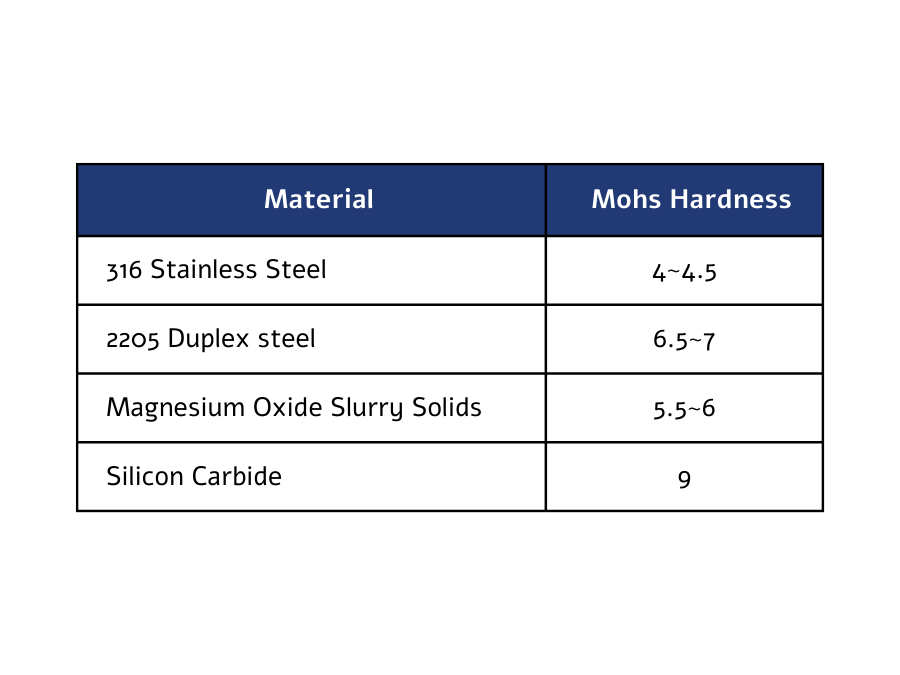
Using 316 stainless steel or duplex steel as the material for the wet side components led to corrosion and erosion, eventually causing penetration and subsequent damage to internal seal parts. By switching to a silicon carbide lining, with its high hardness and low reactivity, the seal became much more resistant to erosion and corrosion. This significantly extended the maintenance intervals, increasing the service life from less than a month to six months, making it the optimal solution.
CarLife®299 High-Strength Design
The CL299 double seal is a flagship product from Scenic, extensively used across various industries and conditions. It is particularly effective in processes that need to handle VOC emissions, such as those involving strong acids, strong bases, corrosive substances, and volatile compounds.
- Back-to-Back Configuration: Features a back-to-back arrangement for optimal performance.
- Bidirectional Self-Circulation Design: Ensures forced transport and flow diversion, enhancing heat exchange efficiency within the seal chamber.
- Bidirectional Balanced Structure: Provides high stability and reliability in sealing.
- Self-Aligning Mechanism: Accommodates misalignment and automatically compensates for axial displacement.

CarLife®299 Structure Diagram
Highlight Performance
After implementing this upgrade, Scenic conducted extensive testing and monitoring of the CL299. The results indicate that it performs exceptionally well in MgO slurry, significantly reducing the previous erosion issues. Seals that previously needed maintenance every 2-3 weeks now last over six months, greatly lowering maintenance costs and boosting production efficiency.
- Improved Erosion and Corrosion Resistance: Silicon carbide has greatly increased the durability against MgO slurry.
- Reduced Risk of Magnesium Oxide Crystallization: Enhanced sealing effectiveness minimizes crystallization risks.
- Extended Service Life: The seal's lifespan has been extended from 2-3 weeks to more than 6 months.
- Enhanced Energy Efficiency: Improved performance contributes to increased production efficiency.
This innovative solution not only addressed the Steel Refining Plant’s immediate needs but also provides a valuable reference for other companies facing similar issues. Our success demonstrates that through technological innovation and material improvements, production challenges can be effectively managed, delivering substantial value to our clients.