

A Breakthrough in Sealing for Large Mixing Tanks - The Advanced Structure MGS®2000
In chemical plants, large-scale polymerization tanks are commonplace, boasting substantial dimensions and output capacities. During operation, the interaction between the agitator and the liquid often generates slight, rhythmic vibrations. To ensure flawless sealing, seals affixed to the shaft must contend with these vibrations. Unfortunately, the wedge seal frequently fall short under such conditions, necessitating high-pressure application for adequate sealing. Moreover, they are prone to failure due to shaft vibrations, sometimes leading to shaft abrasion.
Enter Scenic's MGS®2000 cartridge seal—an optimal solution to this challenge. Leveraging its advanced bi-directional balance structure, it adeptly withstands shaft vibrations and misalignment, guaranteeing consistent sealing efficacy. Notably, this seal boasts straightforward installation, saving valuable time, and offers versatile application of various flushing schemes, thereby boosting overall production efficiency.
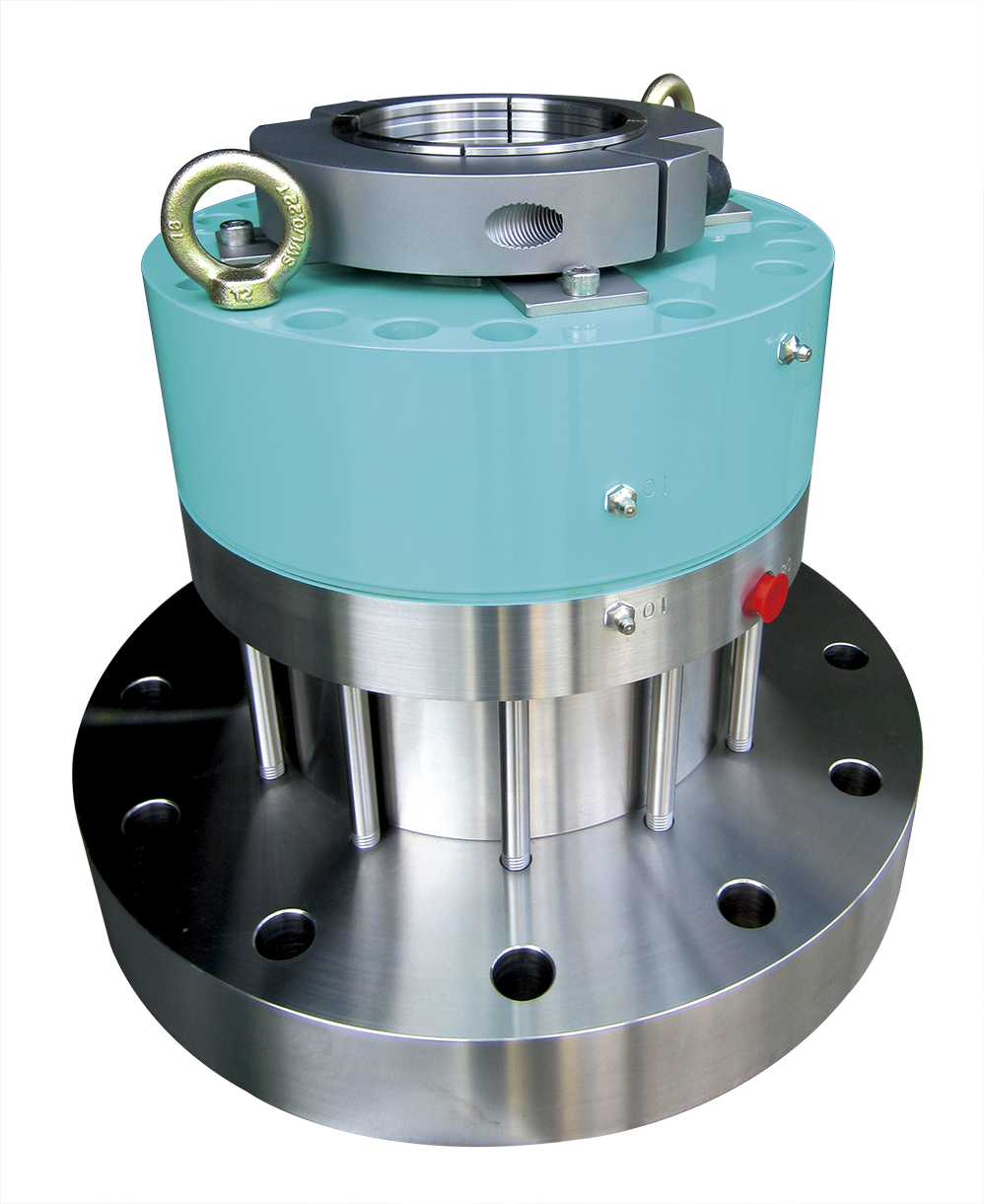
MGS®2000 with Bearing: Ensures robust performance and durability in handling equipment vibrations.
WORKING CONDITION
- Industry: Chemical & Petrochemical
- Equipment: Reactor
- Temperature: 100ºC
- Fluid: MBS resin
- Pressure:12 kg/cm2
- Shaft Diameter: 6" x140MM
- Rotating Speed: 20~80 rpm
- Sealing Type (Before): PTFE Wedge Seal
- Sealing Type (After): Dual Cartridge Seal MGS®2000
BEFORE PTFE Wedge Seal
- The wedge seal requires a pressure at least 1.5kg/cm2 higher than the process side pressure to ensure proper sealing.
- During operation of the mixer, vibrations of the shaft can exert excessive pressure on the internal of the wedge seal, potentially causing deformation or detachment of the seal faces. Shaft misalignment exceeding 0.3mm may also lead to displacement of the seal faces and subsequent failure.
- The installation process of component seals is relatively complex, requiring precise positioning of various parts. Improper installation can easily result in seal failure.
- When using API Plan54 as the flushing scheme for the wedge seal, it necessitates sharing the cooling oil tank with the entire process, posing challenges in control and the risk of seal failure due to contamination of the cooling oil tank.
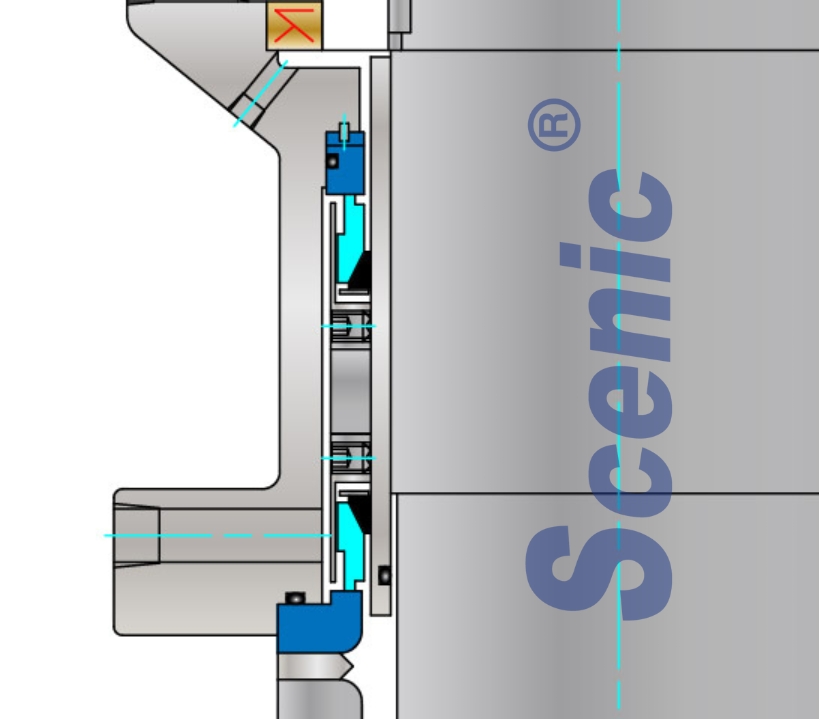
PTEF Wedge Seal: During operation, the wedge can damage the pump shaft due to equipment vibrations.
AFTER Dual Cartridge Seal MGS®2000
- Tailored for mixers, the back-to-back cartridge mechanical shaft seal features a bi-directional balance structure, adept at enduring vibrations from mixer shafts.
- Its bi-directional balance structure enables it to resist the tremendous pressure caused by vibrations of the shaft in the mixing tank, achieving self-misalignment. Moreover, it compensates for axial displacement and ensures stable sealing surfaces, thus upholding sealing efficiency.
- The cartridge-style structure simplifies transportation and installation. Delivered pre-assembled from the factory, onsite personnel only need to tighten screws and remove setting clips, saving time and enhancing efficiency.
- By leveraging API Plan52, 53, and 54 flexibly, the seal can tailor the flushing scheme to site conditions. Its independent cooling oil system further facilitates convenient control and reduces contamination risks.
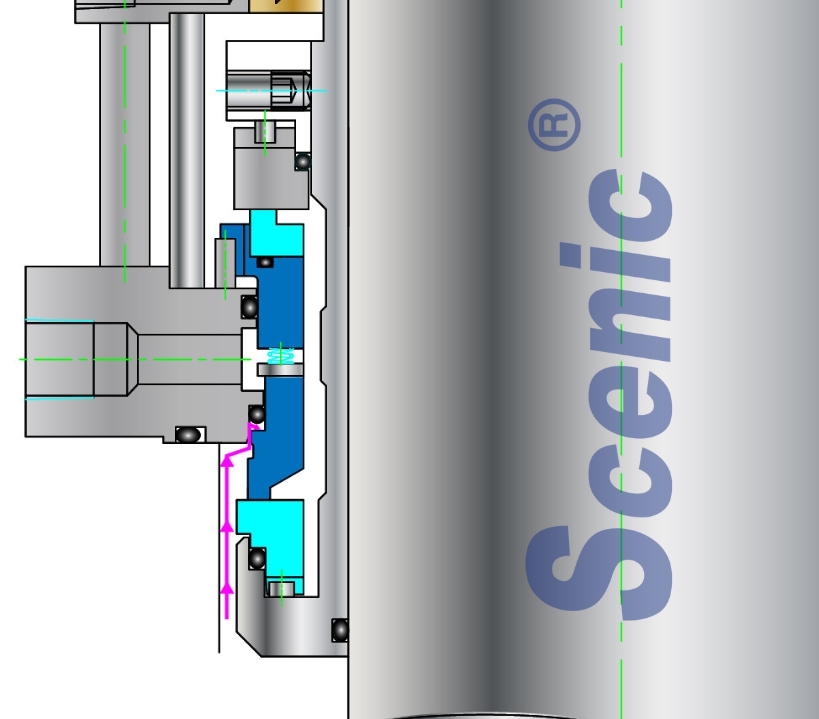
MGS®2000: The advanced bidirectional balance structure, with a gap between the sealing part and the pump shaft, ensures no abrasion due to equipment vibrations.
HIGHTLIGHT
- Cartridge-style: Easy installation, maintenance, and repair, with low maintenance costs.
- Advanced bi-directional balance structure: The gap between the sealing surface components and the shaft enables it to counterbalance shaft vibrations during operation. The shared spring assembly automatically compensates for axial displacement.
- Prolonged seal lifespan: Drastically reduces MTBF (Mean Time Between Failures). The MGS®2000 has been operating reliably since 2006, showcasing its longevity.