

Mechanical Seals Redefining Carbon Reduction: Net-Zero Gas Seals
As net-zero goals reshape industries, gas seals stand out with their "non-contact, friction-free" operation, reducing maintenance costs, energy use, and resource consumption. Eliminating the need for auxiliary systems, gas seals combine efficiency with sustainability. With further advancements to overcome operational challenges, they are set to become essential in the industrial sealing landscape.
To meet the 2025 carbon neutrality goals, the mechanical seal industry is taking proactive steps to support carbon reduction initiatives; Nations across the globe are introducing stringent regulations to achieve carbon neutrality by 2050. Industries across the board are actively seeking innovative solutions to cut emissions and contribute to this critical objective.
The Climate Change Performance Index (CCPI), unveiled at the 28th UN Climate Change Conference (COP28), Taiwan had been ranked seventh from the bottom globally, receiving an "extremely poor" rating for its greenhouse gas emissions. In response, Taiwan's Ministry of Environment has recently strengthened carbon fee policies and accelerate decarbonization initiatives.
As one of the leading designer and manufacturer of mechanical seals, Scenic® has long been dedicated in advocating carbon reduction technologies while at the same time assisting clients in reducing costs. With a focus on lowering in material consumption, energy efficiency, and sustainable solutions, Scenic® introduced cartridge seals at its inception to address the high inventory costs associated with component seals. Today, in alignment with the global drive for industrial decarbonization, Scenic® is championing the use of gas seals (non-contact seals) for pumps, blowers, mixers and steam turbines. Initially developed for high-speed compressors and steam turbines, gas seal technology is now being across a wider range of rotating equipment due to its exceptional sealing performance and energy-saving advantages.
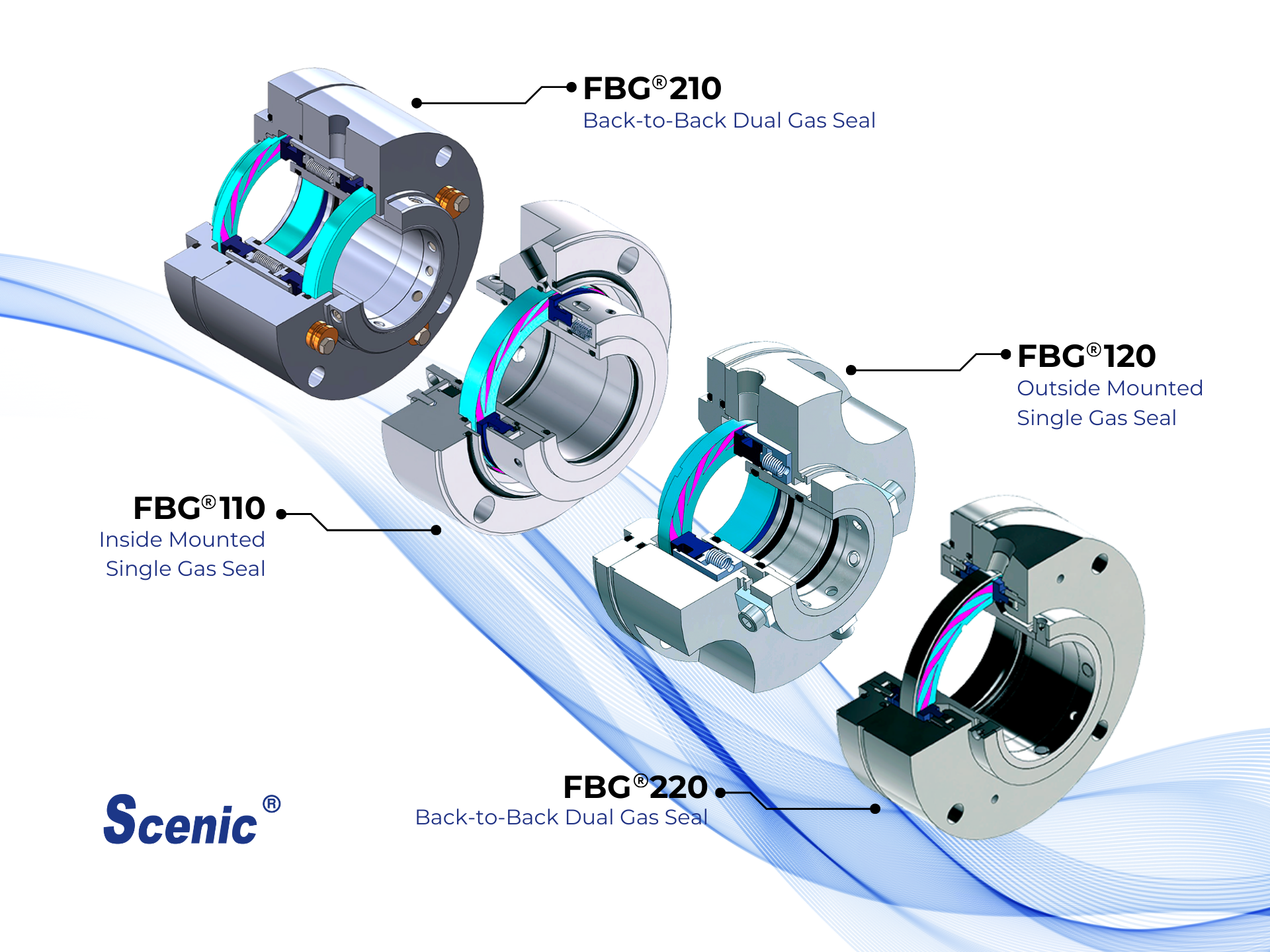
Scenic® patented Non-contact dry gas seals series FBG®
How Gas Seals Support Carbon Reduction
Cartridge non-contact gas seals share a similar internal structure with contact seals, including components like metal parts, springs, rotating rings, stationary rings, and secondary sealing elements such as O-rings. However, the defining feature of gas seals lies in their sealing faces, which are precisely engineered with "Spiral grooves" to draw in gas. These grooves are designed by different manufacturers in various patterns.

Scenic® patented inverse point spiral grooves for dry gas seal faces
Zero-Leakage for Gas Seals
Non-contact gas seals operate based on the creation of an ultra-thin, pressurized rigid gas film-thinner than 3 micrometer. When equipment is running, pressurized gas flows through the spiral grooves on the seal face, generating a lifting force that separates the two seal rings. This rigid dynamic gas film prevents contact between the seal faces, enabling frictionless operation. In clean, contaminant-free environments, this gas seal can maintain stable performance for years, achieving the ideal performance of "zero friction, zero heat loss, and zero leakage."
Minimal Resource Consumption
Gas seals, unlike traditional contact seals that rely on liquids or oils as sealing media, use gas as the sealing medium.
- Single Gas Seals: These seals utilize process gas or atmospheric air as the flushing source. The spiral grooves create a suction effect during operation, drawing to form the rigid gas film, preventing against face contact, and eliminating the need for additional sealing support systems.
- Dual Gas Seals: Designed in accordance with API 682 PLAN 74, these seals use pressurized nitrogen as an auxiliary medium to enhance sealing performance.
Gas seals eliminate the need for cooling water tanks or oil lubrication systems, significantly reducing energy and water consumption. The nitrogen auxiliary system offers an eco-friendly solution, completely removing the risk of oil contamination. This not only minimizes resource waste but also ensures a cleaner operating environment. These advantages position gas seals as a sustainable and efficient solution for modern industrial applications.
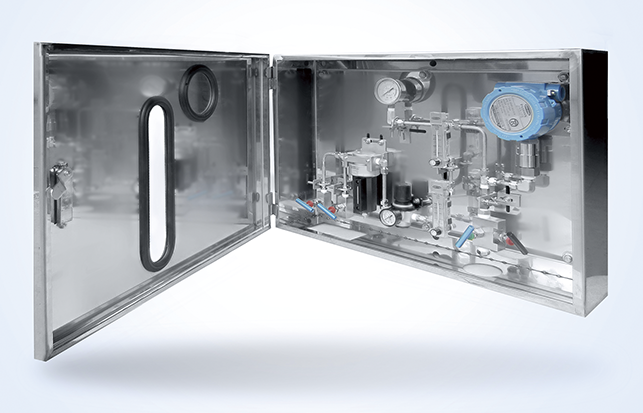
Nitrogen auxiliary system
Superior Energy Efficiency
Scenic® dynamic testing data reveals that gas seals consume only 5% to 12% of the energy required by contact mechanical seals. This impressive energy efficiency is primarily due to the non-contact operation of gas seals, which eliminates friction and the associated energy losses.
Unlike contact seals, which require cooling systems to act as both a lubricant and a coolant for the sealing faces, gas seals eliminate the need for cooling systems, achieve effective sealing through a stable gas film. Additionally, gas seals minimize maintenance requirements, enhancing both operational efficiency and cost savings.
The benefits extend beyond cost reduction. By significantly lowering energy consumption, gas seals help reduce carbon emissions and contribute to achieving environmental sustainability goals. This makes them an invaluable asset for companies aiming to enhance operational efficiency, reduce costs, and advance their sustainability initiatives in an increasingly eco-conscious market.
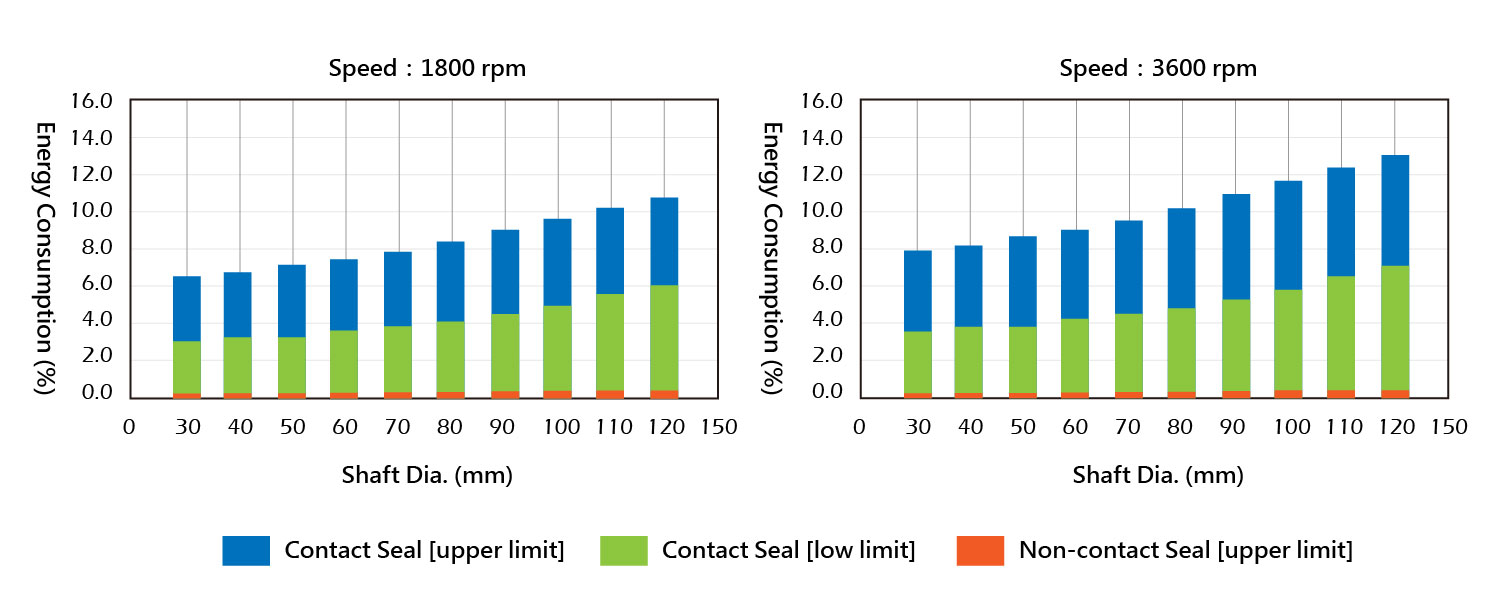
Contact and non-contact seals current loss comparison table
Evolution and Applications of Gas Seals
Expanding Horizons: From Blowers to Pumps
The increasing demand for high-efficiency and energy-saving industrial equipment has driven the evolution of gas seal technology, extending its applications far beyond traditional boundaries.
Originally, gas seals were designed for high-speed compressors, aerospace turbines, and other high-pressure, high-velocity (high PV) equipment. However, advancements in manufacturing techniques have significantly reduced production costs, transforming gas seals from a high-end specialty product into an accessible solution for a broader range of industries. Today, gas seals are widely applied in pumps, mixers, and other rotating equipment, demonstrating outstanding advantages such as frictionless operation and zero leakage.
These features make gas seals particularly ideal for industries with stringent cleanliness requirements, such as biopharmaceutical production and high-purity chemical processing. Their ability to maintain contamination-free environments ensures reliable performance in the most demanding applications, meeting critical operational and regulatory standards.
The continuous development of gas seal technology highlights its versatility and effectiveness, delivering unparalleled efficiency, reliability, and sustainability in industrial operations worldwide.
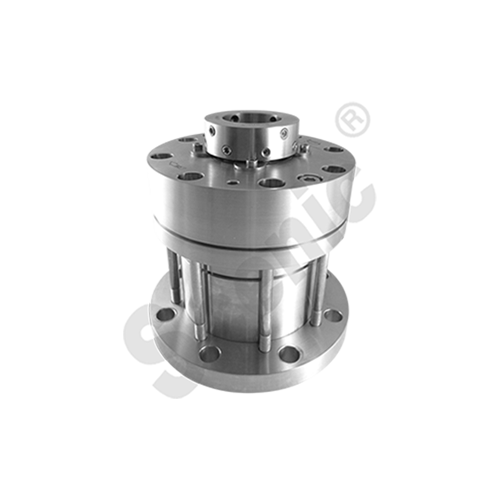
Non-contact dry gas seal GSB300 for mixers
Enhancing Durability: Adapting Gas Seals to Challenging Industrial Conditions
Advancements in gas seal technology are focused on broadening their application scope and enhancing their adaptability to various operating conditions, including diverse media, temperatures, and pressures. Due to their reliance on a rigid gas film, gas seals face limitations in extreme environments, such as high-temperature, high-pressure processes in steelmaking or petrochemical operations. The presence of particulates, dust, or contaminants can disrupt the formation and stability of the gas film, compromising sealing performance. Additionally, nitrogen-assisted systems require a reliable, uninterrupted supply of clean, stable, high-pressure nitrogen to ensure optimal operation.
Despite these challenges, overcoming these limitations could revolutionize industrial sealing solutions. By addressing these obstacles, gas seals would unlock new opportunities in demanding environments, transforming their role in industrial applications.
The Future of Gas Seals: Unlocking Carbon Reduction Potential
The global drive toward low-carbon economies is expected to significantly expand the application of gas seal technology in the coming years.
As industrial processes become increasingly standardized and the demand for carbon reduction intensifies, gas seals are emerging as a leading solution for industrial decarbonization. Offering unparalleled efficiency and environmental benefits, gas seals align seamlessly with global carbon neutrality targets. They not only reduce emissions but also deliver cost savings and operational sustainability, making them the preferred choice for modern equipment.
With their ability to balance economic and environmental benefits, gas seals are set to play a pivotal role in driving sustainable industrial growth and supporting global decarbonization efforts.