
Cartridge Seals vs. Component Seals: Discover the Advantages of Easy Installation and Superior Sealing
In the mechanical engineering field, cartridge seals represent a superior technology for dynamic sealing. Their primary advantage over component seals is their ease of installation and maintenance. Workers can install cartridge seals without complex procedures, reducing human error, enhancing efficiency, and most importantly, lowering overall costs.
Cartridge seals offer superior sealing performance compared to component seals. Designed by integrating principles from fluid mechanics, thermodynamics, mechanics, and materials science, these seals adapt to various scenarios and applications. They effectively handle challenges such as high-corrosion environments, high-viscosity fluids, vibrating equipment, and shaft misalignment. With their advanced design and superior performance, cartridge seals represent the cutting edge of dynamic sealing technology.

Easy Installation
Pre-installed Sealing Components
Cartridge seals integrate the stationary ring, rotary ring, gland, and bushing into a single, complete unit before shipping to customers. This design reduces the impact of external factors on the sealing effect, such as the intrusion of dust or other impurities, thereby improving the reliability of the seal.
In contrast, traditional component seals are shipped in a free state, requiring customers to calculate the installation position during equipment setup. This increases the likelihood of mixing parts in inventory and heightens the risk of damaging secondary seals during installation.
Less Human Error
Since the sealing components of cartridge seals are pre-assembled, installation is as simple as tightening the screws. This ease of installation requires no specialized skills, reducing the risk of human error and leaks during the process, thereby increasing precision and efficiency.
In contrast, component seals require precise positioning and assembly of individual components on-site. This process demands a high level of skill from the installer, making improper installation and human error a common cause of seal failure in component seals.
Sealing Failure Diagnosis
Scenic's cartridge seals undergo rigorous pressure testing that exceeds international standards before leaving the factory. These tests simulate the operational pressures the seals will encounter, ensuring long-term stability and leak-free performance during dynamic operation. If a seal fails after installation, professional engineers can accurately diagnose the cause based on the damage observed.
In contrast, traditional component seals can only be pressure tested after installation on the equipment. This often necessitates disassembly and reinstallation, consuming additional labor and increasing risk. Moreover, determining the exact cause of failure is more challenging with component seals.
Maintenance Costs
Cartridge seals have a long lifespan and extended maintenance intervals. When maintenance is required, only the internal wear components, such as sealing rings, springs, and rubber O-rings, need to be replaced. The atmospheric side metal components remain intact, and some parts from Scenic's seal series are interchangeable, significantly reducing inventory costs.
Component seals have a lower initial cost but a shorter lifespan and higher failure frequency. Maintenance for these seals is time-consuming and complex, requiring skilled and experienced technicians. This makes component seals less efficient and cost-effective in modern applications.
Modular Components
Cartridge seals are designed with modular components that comply with DIN/ANSI standards, making them adaptable to different pump models and specifications. This design facilitates quick deployment and replacement for customers without the need for complex adjustments or customization.
In contrast, component seals lack standardization and have complex designs. There are various styles available in the market, making it difficult for users to determine the internal component specifications based solely on the external appearance. Replacement parts must be purchased after disassembling the seal, and specifications and configurations may vary slightly between manufacturers.

Superior Sealing Performance
Durability and Longevity
The internal structure of cartridge seals not only ensures sealing performance but also incorporates various precision designs to maintain stable sealing surfaces, prevent deformation, facilitate smooth fluid flow without overheating, and automatically correct shaft misalignment. These details ensure the durability of cartridge seals.
In contrast, traditional seals are prone to deformation of the sealing surfaces and cannot automatically correct shaft misalignment. This often leads to wear between the bushing and shaft, power consumption, and high replacement rates.
Wide Application Range
Cartridge seals are versatile and sustainable, suitable for various fluids such as corrosive, high viscosity, particle-laden, and volatile fluids. They are also designed for different equipment such as pumps, mixers, and fans. In addressing increasingly stringent environmental regulations, cartridge seals help factories mitigate VOC leaks, allowing personnel to focus on process improvement without worrying about leaks.
Traditional seals may be suitable for scenarios such as ambient temperature water pumps, old equipment, or equipment with small shafts. However, they are inadequate for handling VOC issues or more complex operating conditions, potentially leading to environmental problems when seal failure occurs.
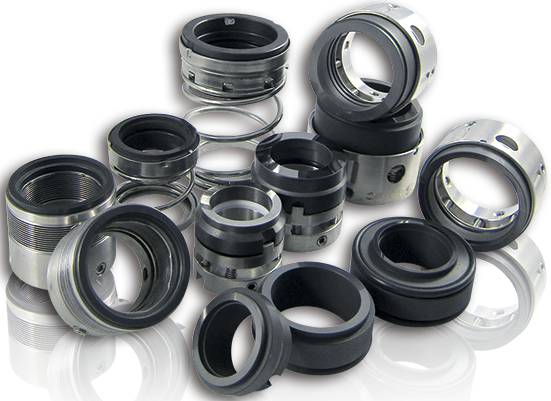
However, not all traditional seals can be replaced by cartridge seals. Considering factors such as installation methods, dimensions, and costs, traditional seals remain the preferred choice for most equipment configurations in process environments without VOC environmental requirements. Therefore, traditional seals cannot be completely replaced by cartridge seals. Users must understand the process requirements to select the most suitable mechanical seal, maximizing performance and cost-effectiveness under different operating conditions.